Newsletter Subscribe
Enter your email address below and subscribe to our newsletter

 ByJohn A
AI supports mining safety through integrated sensing, monitoring, and decision tools. It aggregates gas, structural, and equipment data to detect anomalies and trigger alerts, automated shutoffs, and safe-response protocols. Predictive models forecast hazards, while real-time dashboards provide actionable insights for workers. Governance and privacy safeguards aim for reliable alerts and autonomous action without eroding worker agency. The approach is practical and precautionary, directing attention to what comes next as sites adopt broader risk controls.
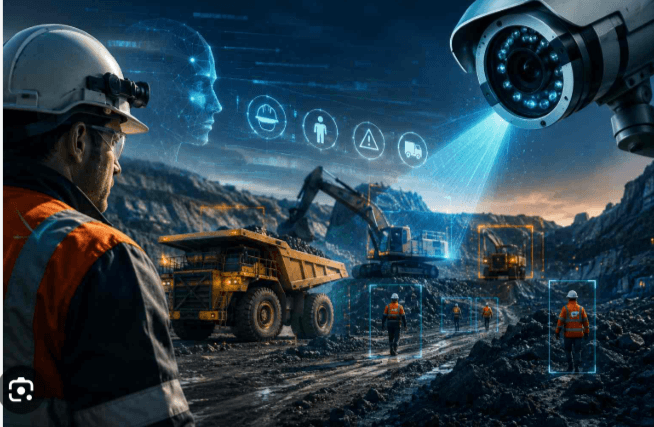
Modern mines deploy a range of AI-driven sensing and monitoring tools to read the underground or open-air environment for safety indicators. These systems perform continuous hazard detection, integrating data from gas sensors, vibration meters, thermal cameras, and structural monitors. Sensor integration enables rapid alerts, automated shutoffs, and orderly response protocols, supporting informed decisions while preserving operator autonomy and safety.
This approach demands AI ethics, transparent model governance, and respect for data privacy. Practically, it enables informed planning, mitigates surprises, and sustains safe, purposeful exploration of mining operations.
See also: digitalhub4geeks
Real-time monitoring builds on prior hazard forecasting by continuously collecting and analyzing live data from sensors, equipment, and worker wearable devices.
Systems provide immediate alerts for abnormal readings, enabling swift interventions and safer workflows.
Emphasis is placed on data governance to ensure responsible handling, transparency, and access controls.
Ethical AI guides alert thresholds, preserving worker autonomy while prioritizing safety and trust.
Data-driven decisions underpin safer, smarter mining operations by translating sensor feeds, audit trails, and worker input into actionable insight.
The approach employs data driven frameworks to support safer mines through structured workflows, continuous validation, and explicit accountability.
Predictive analytics inform hazard modeling, enabling preemptive mitigations and robust response plans, while governance ensures transparency, adaptability, and disciplined risk management across varied mine sites.
AI governance establishes oversight; compliance audits are conducted regularly, documenting policies, risks, and controls. Mines implement traceability, transparent reporting, and independent reviews to ensure regulatory alignment, safeguard workers, and maintain operational freedom within precautionary, systematic bounds.
Sixty percent of sites report improved incident detection after AI training, though workers receive formal training analytics, hands-on sessions, and mentorship programs to interpret alerts; programs prioritize practical, systematic safety use, with precautionary guidelines and freedom-minded, autonomous application.
AI can reduce false alarms and maintenance costs through predictive upkeep, improving AI efficiency. It deposits systematic safeguards, reduces false alarms, and delivers maintenance cost savings; a practical approach prioritizes proactive monitoring and precautionary, freedom-oriented operations.
Data privacy is addressed through strict access controls, transparent data flows, and defined retention periods; data ownership rests with workers or the enterprise depending on policy. Privacy concerns are mitigated by consent, auditing, and anonymization, with ongoing oversight and safeguards.
AI ROI timeline varies by project scale, but typically spans 6–24 months, with Safety cost benefit realized through reduced incidents and equipment downtime. The approach is practical, systematic, precautionary, balancing benefits against upfront investments and ongoing maintenance.
In sum, AI integrates diverse sensors, analytics, and governance to forewarn hazards and guide decisive actions. By predicting events before they occur, monitoring conditions in real time, and informing data-driven decisions, mining operations become more controlled and resilient. The framework functions like a safety net—broad yet precise—capturing subtle risk signals while preserving worker autonomy and privacy. Practically, this systematic approach reduces exposure, accelerates responses, and sustains safer, more efficient mines across sites.